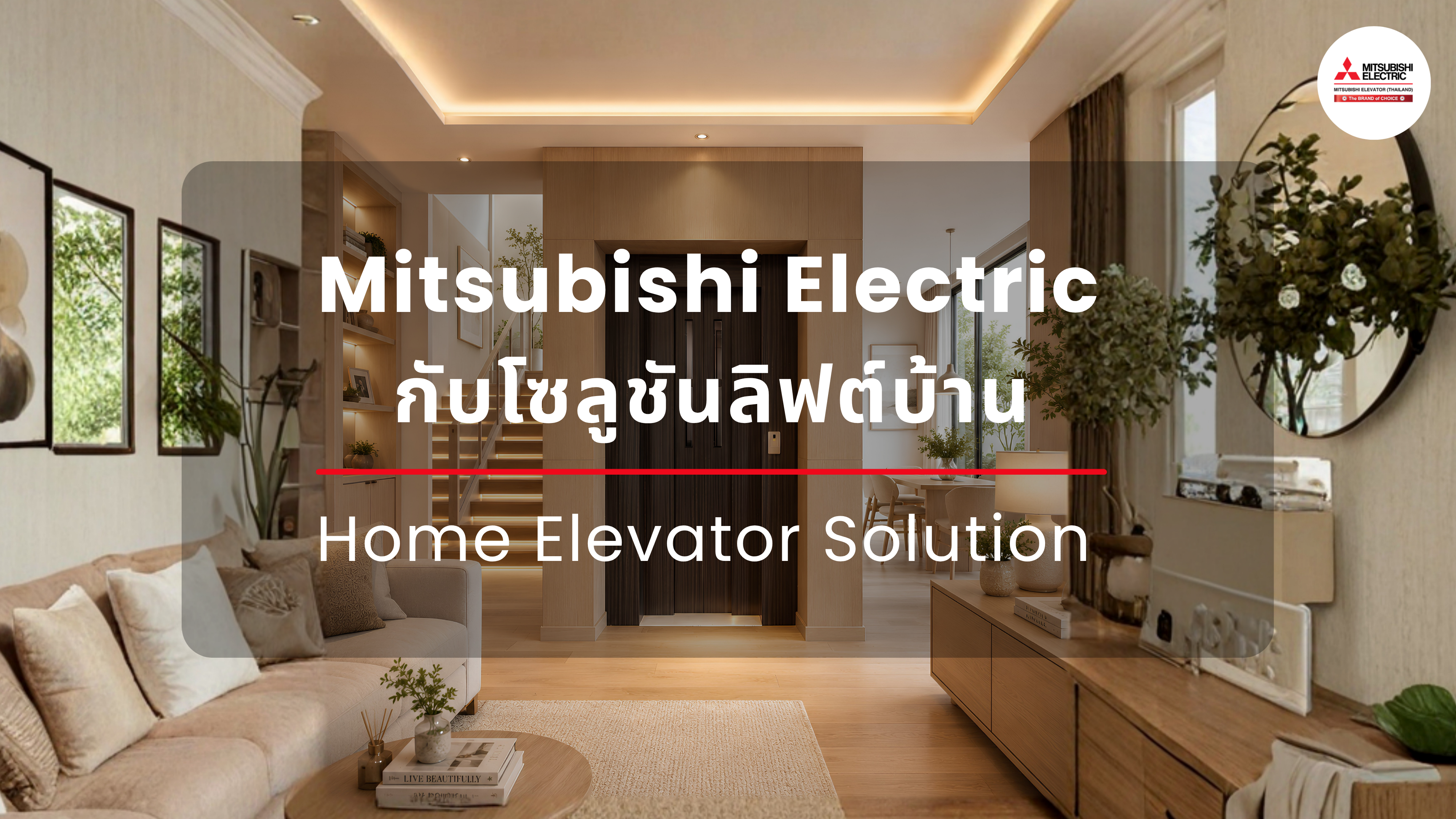
Mitsubishi Elevator for Home Elevator
Mitsubishi Electric Home Elevator for Modern Residential Living
Mitsubishi Home Elevator made from Japan, offers residential elevator solutions designed for modern homes, with a focus on comfort, safety, reliability, technology and long-term use.
Mitsubishi Electric home elevators can be suitable for homes with two or more floors and can provide convenient access for elderly family members, wheelchair users, families with children, and homeowners who need to transport items between floors.
Before installation, a professional site survey is recommended because factors such as shaft dimensions, cabin size, floor height, structural conditions, available space, and building configuration can affect the final elevator specification and installation cost.
Typical residential configurations may include:
- Capacity: Approximately 3–4 people or 200–300 kg, depending on the model
- Speed: Approximately 20–30 meters per minute, depending on the model
- Designed specifically for residential applications
- Able to connect with Robot
- Able to connect with Elder Care Application
- Smooth and comfortable operation
- Mitsubishi Electric safety and control technologies
- Long-term after-sales service and parts support
- Emergency support services, depending on the applicable service package and location
Actual specifications, available features, and installation requirements should always be confirmed with Mitsubishi Electric or an authorized representative for the specific model.
Home Elevator Safety Features
Safety is one of the most important considerations when choosing a residential elevator, particularly for families with elderly people and children. Depending on the model and configuration, Mitsubishi Electric home elevators may incorporate safety and emergency features such as:
- Emergency Backup and Landing System - An emergency system can help bring the elevator to a designated floor and allow passengers to exit safely in the event of a power failure.
- Safety Light Sensor - A Safety Light Sensor can detect people or objects in the elevator doorway and help prevent the doors from closing when an obstruction is detected.
- Door Safety Protection - Door safety systems help reduce the risk of passengers being trapped or injured by closing elevator doors.
- Emergency Lighting - Emergency lighting can provide illumination inside the elevator cabin during a power outage.
- Emergency Alarm or Communication System - Emergency alarm and communication features can help passengers request assistance when an abnormal situation occurs. Available functions depend on the specific model and configuration.
- Overspeed Protection - Safety systems are designed to monitor elevator operation and respond to abnormal speed conditions.
- Door Interlock and Safety Control - The elevator is designed to operate only when the doors are in the appropriate safe condition, helping prevent unintended movement with the doors open.
- MELD (Mitsubishi Emergency Landing Device) - The Mitsubishi Emergency Landing Device (MELD) can use backup battery power during a power failure to bring the elevator to a designated landing floor and open the doors so passengers can exit.
These safety features are particularly important for residential applications because family members may use the elevator independently, including elderly people and children.
Additional Benefits of a Mitsubishi Electric Home Elevator
Safety is only one part of the overall home elevator experience. Other important benefits include:
- Smooth and Comfortable Ride - Smooth acceleration and deceleration can provide a more comfortable experience, particularly for elderly passengers and people with mobility limitations.
- Space-Efficient Residential Design - Home elevators are designed specifically for residential environments, allowing homeowners and architects to plan the elevator around the available space and house layout.
- Quiet Operation – Smooth operation is particularly important in residential environments where the elevator may be located close to bedrooms, living areas, or other frequently used spaces.
- Long-Term Service and Support -A home elevator is a long-term investment. Reliable maintenance, technical support, and access to replacement parts are therefore important considerations when selecting an elevator brand.
Choosing an established elevator manufacturer with long-term service capabilities can provide greater confidence throughout the elevator's operating life.
Is a Home Elevator Worth It?
Whether a home elevator is worth the investment depends on how the home will be used today and in the future. A home elevator can be particularly worthwhile for homeowners;
- Plan to live in the property for many years
- Have elderly family members
- Have a multi-generational household
- Need wheelchair or mobility accessibility
- Own a two-story or multi-story home
- Want to prepare the home for aging in place
- Want greater convenience when moving between floors
- Are developing a luxury or smart home
- Want to create a future-ready residence
For many homeowners, the biggest benefit is not luxury. It is the ability to make the home more accessible, safer, more convenient, and better suited to long-term living.
Should Your House Have an Elevator?
A home elevator can provide significant benefits in terms of accessibility, comfort, safety, convenience, and future living. A modern home elevator can be more than a luxury feature. It can be part of a future-ready home designed for every stage of life.
As residential design continues to evolve toward Smart Home, Universal Design, Aging in Place, Accessibility, and Future Living, home elevators are becoming an increasingly practical consideration for modern homeowners.
Because a modern home is not just a place to live. It is a place designed to provide a better quality of life for everyone in the family - today and for years to come.


